

Key Takeaways
- Start onboarding before the employee’s first day to reduce first-day overwhelm.
- Utilize digital tools to automate administrative tasks and centralize resources.
- Assign mentors or buddies to provide personalized support and foster engagement.
- Gather feedback to improve the onboarding experience continuously.
Introduction
A positive onboarding experience can have a profound and lasting impact on employee retention, engagement, and productivity. Studies have shown that employees who feel welcomed and supported during their initial weeks are more likely to feel invested in their organization’s success over the long term. Organizations that invest in streamlined onboarding set new hires up for immediate success and contribute to building a workplace culture rooted in transparency, clarity, and ongoing support. Today’s most innovative onboarding approaches leverage digital platforms, structured connections, and continuous feedback mechanisms that ensure each process step is smooth and welcoming for new team members. For businesses hoping to bridge the gap between hiring and sustained employee achievement, integrating user-friendly resources such as a candidate job search is essential for attracting and supporting top talent right from the start, helping the organization stand out in a competitive hiring landscape.
Companies can improve the onboarding process for new employees by prioritizing early engagement, providing easy access to resources, and fostering trust. Open communication and explicit training materials can transform onboarding into a transformative experience, driving growth, confidence, and a shared purpose. Customized support pathways and knowledge-sharing environments can streamline the transition, offering easy access to role-specific documents, automating repetitive paperwork, and amplifying face-to-face connections. As businesses adapt to hybrid, remote, and flexible work trends, robust digital tools and agile processes can offer greater flexibility and support. A well-structured onboarding process promotes inclusion and demonstrates the company’s value for each team member’s comfort and success.
Initiate Preboarding Activities
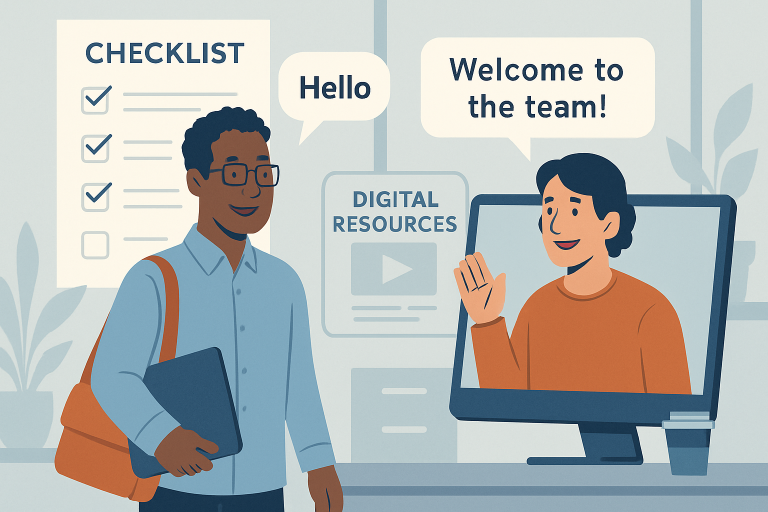
Preboarding is crucial in easing first-day uncertainty and making new hires feel welcome. Proactive communication is key—sending a personalized welcome email, distributing role-specific onboarding documents, and offering access to initial resources before day one helps employees arrive prepared and reassured. This early outreach doesn’t just set expectations; it signals that the organization values the new hire and is committed to their success. According to a Forbes Human Resources Council article, transparent documentation and timely answers to questions are fundamental to a smooth onboarding journey. Preparing for the first day together ensures that the experience is not overwhelming and encourages a sense of belonging well before work officially begins.
Automate Administrative Tasks
Manual paperwork, redundant data entry, and repetitive administrative tasks can significantly slow the onboarding process and cause frustration for HR professionals and new employees. Automating these tasks through easy-to-use digital platforms allows HR teams to dedicate more time to welcoming new hires and building relationships, instead of getting bogged down by administrative burdens. Tools that support e-signatures, electronic benefits enrollment, and secure submission of compliance and tax documents save hours of valuable time and improve accuracy. According to a Forbes Human Resources Council report, automation significantly reduces the risk of costly errors. It supports compliance across organizations of all sizes, freeing up employees and HR staff to focus on growth and engagement.
Centralize Resources and Information
Centralizing all essential resources makes it much easier for new hires to access handbooks, training modules, frequently asked questions, and even organizational charts whenever needed. When materials are housed in one intuitive, searchable location—such as a modern company intranet or a cloud-based document management system—new employees will spend less time tracking answers and engaging more with the business’s mission and values. Over time, this knowledge hub has become a guide for new starters and a reliable resource for existing staff, fostering a culture of knowledge sharing and organizational transparency.
Assign a Mentor or Buddy
Assigning a more experienced colleague—typically known as a mentor or onboarding buddy—can play a transformative role in adjusting and integrating a new team member. Buddies are available to answer real-time questions that might not be found in official documents, offer insights into unwritten cultural norms, and share practical tips for thriving within the company. This supportive, informal relationship helps the newcomer feel confident, included, and empowered to succeed while providing them with a reliable go-to person for advice during their initial weeks.
Personalize the Onboarding Experience
No two employees are exactly alike—each new hire brings unique skills, needs, expectations, and experiences. Recognizing this, effective onboarding programs increasingly focus on providing a personalized experience. Tailoring training modules and welcome kits to the individual and their specific role demonstrates an investment in their growth and future success. Personalized welcome videos, direct messages from managers or executive leaders, and opportunities to connect with team members all create a meaningful sense of connection from the first day. This approach enhances engagement and helps foster early loyalty, encouraging employees to see their organization as a place they can truly belong.
Utilize Learning Management Systems (LMS)
A robust Learning Management System (LMS) is invaluable for both HR and new hires, streamlining training processes and allowing employees to learn at their own pace. With an LMS, all essential onboarding content is accessible from anywhere, making it especially useful for hybrid or remote teams that may spread across multiple locations or time zones. These platforms also enable organizations to maintain consistency in foundational knowledge and regulatory compliance, ensuring that all employees—regardless of where or how they work—begin their journey with the same critical information and clear expectations.
Gather Feedback and Continuously Improve
Collecting feedback at regular intervals is vital for continually improving the onboarding process. Structured surveys, informal check-ins, and open feedback sessions encourage employees to share their honest perspectives and flag areas where the onboarding experience might be enhanced. Listening closely to new hires’ suggestions demonstrates an organizational commitment to continuous improvement, adaptability, and mutual respect. Over time, using data-driven insights to refine onboarding ultimately boosts satisfaction and retention across the business.
Make the First Day Special
The first day of work is a milestone moment that can set the tone for an employee’s journey with your company—going beyond basic introductions by planning thoughtful touches—whether a personalized desk setup, a coffee with a team leader, a team lunch, or an engaging virtual meet-and-greet—can make a new hire feel valued. These memorable gestures show that you care about your employees not just as workers, but as people, helping to ease any first-day nerves and foster an immediate sense of belonging.
Effective employee onboarding is an ongoing investment that yields substantial long-term returns for organizations. Higher retention rates, greater engagement, and increased productivity are just the beginning. By embracing innovative digital solutions, fostering meaningful human connections, offering tailored experiences, and inviting continuous feedback and improvement, companies create a workplace environment where new talent is truly empowered to thrive from day one.