

Utility suppliers’ impact extends far beyond the initial installation of water, energy, and telecom systems. Their ongoing contributions—from regulatory compliance and construction to technological innovations—guarantee the reliability and future-readiness of the infrastructure that drives economic growth and enhances local communities. Efficient collaboration with industry partners helps mitigate project risks while maintaining clear alignment with evolving safety, sustainability, and technological standards.
Utility suppliers are crucial in modern infrastructure projects, providing essential services and expertise for communities. They integrate key systems with high quality and efficiency, collaborating closely with stakeholders to ensure optimal performance and long-term sustainability in new developments. For example, early engagement with an electrical conduit supplier can streamline the planning stage and facilitate a smoother project execution by ensuring the availability of critical components needed for power distribution and safety.
Planning and Design
Strategic planning and meticulous design are essential for successful infrastructure projects. Utility suppliers collaborate with developers to evaluate site conditions, forecast demand, and integrate with existing systems, resulting in robust, adaptable infrastructure networks. Utilities provide technical guidance for optimizing pipeline placement and routing, minimizing operational challenges. A strong partnership ensures resource allocation and budget adherence. Suppliers offer scalable solutions for population growth, smart city initiatives, and regulatory changes. Innovative design strategies ensure resilient, future-proof infrastructure.
Regulatory Compliance
Compliance with regulatory requirements is crucial for infrastructure projects, requiring utility suppliers to follow federal, state, and local laws. These regulations cover environmental protection, safety standards, and resource efficiency. Compliance is achieved through detailed reporting, permitting, inspections, and continuous assessments. Utility suppliers manage this process on behalf of stakeholders, maintaining transparency and up-to-date records. This diligence minimizes legal risks and assures investors, regulators, and the public that the project is handled responsibly.
Construction and Implementation
With plans and permits in hand, the construction phase is where utility suppliers’ expertise truly shines. Their teams are responsible for installing complex systems such as electrical grids, water mains, sewage systems, and telecommunications lines. The precision in this phase is vital to prevent costly delays, avoid safety hazards, and ensure the seamless integration of various utility services.
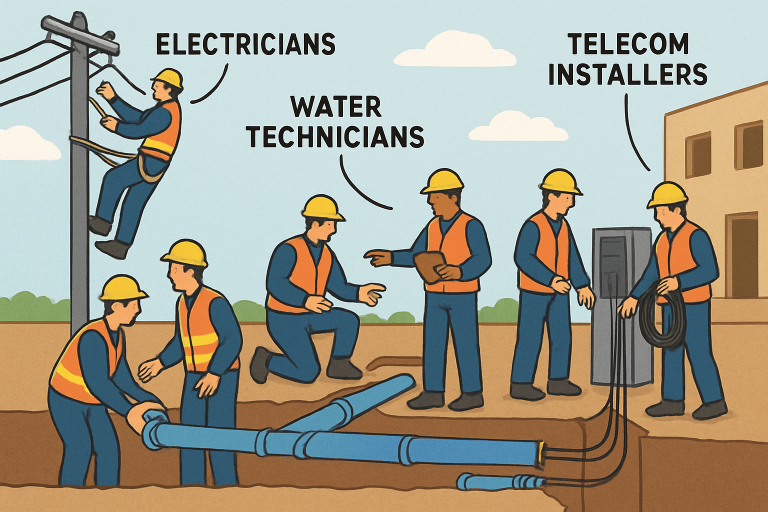
Suppliers leverage advanced construction techniques and project management tools to coordinate scheduling, workforce allocation, and quality control. Effective stakeholder communication and adaptive planning are essential for dealing with unexpected site conditions and mitigating risks. Their ability to execute tasks on time while maintaining stringent quality standards allows broader infrastructure projects to progress swiftly, benefitting developers and the communities they serve.
Maintenance and Upgrades
Utility suppliers are responsible for infrastructure longevity through proactive maintenance, including regular inspections, servicing, and replacing aging components. They also adopt asset management systems to predict potential failures and optimize infrastructure value over the long term. This ensures compliance with safety standards and minimizes downtime.
Environmental Considerations
Environmental stewardship is integral to utility infrastructure planning. Suppliers incorporate sustainability into every project stage—prioritizing renewable energy, water conservation, and minimizing carbon footprints. Environmental impact assessments guide the selection of routes for pipelines and transmission lines, avoiding sensitive habitats and reducing ecological disturbance.
Forward-thinking suppliers are also adopting materials with lower environmental impacts and building infrastructure that supports green solutions, such as electric vehicle charging or distributed energy resources. These efforts align with regulatory obligations and growing stakeholder demands for responsible, low-impact infrastructure development.
Conclusion
Utility suppliers are indispensable partners in the realization of robust, future-focused infrastructure. Their involvement at every project phase ensures the safe, reliable delivery of electricity, water, and telecommunications while embracing sustainability, regulatory rigor, and cutting-edge technology. Utility suppliers are paving the way for the next generation of resilient infrastructure worldwide by fostering strong collaborations and prioritizing smart, sustainable solutions.