

Effective inventory management is essential for the smooth operation of businesses in retail, manufacturing, and logistics. Manual tracking frequently results in errors, delays, and lost productivity, particularly as inventory volumes increase. Many companies are turning to digital solutions that streamline the tracking process and improve overall accuracy to address these challenges. Barcode technology is one such tool that allows for real-time data capture and more precise inventory control.
By assigning unique barcodes to each product or item, businesses can monitor movement, stock levels, and sales with minimal effort. This system reduces human error and enhances accountability throughout the supply chain. Tools like a handheld inventory scanner enable staff to conduct quick and accurate scans across warehouses, stores, or shipping areas. As a result, decision-making becomes more data-driven, leading to better forecasting, reduced waste, and improved customer satisfaction. Over time, this increased efficiency can contribute to smoother daily operations and lower operational costs. It also provides a scalable solution that grows alongside the needs of the business.
Enhancing Accuracy and Reducing Errors
At the heart of any inventory management solution lies the urgent need for accuracy. Even minor errors can, over time, snowball into massive discrepancies that skew financial statements, disrupt production schedules, and damage customer relationships. Traditional manual methods, such as jotting down or typing stock information, are especially susceptible to human error, whether an accidentally skipped barcode, a miskeyed product number, or illegible handwriting. These errors can cascade through systems, making it incredibly difficult to maintain reliable records.
Barcode scanning delivers a quantum leap in precision by automating data entry at the point of action. When an item is scanned, its unique code instantly transfers relevant details to the inventory management system—batch numbers, SKUs, quantities, and more—without risk of interpretation mistakes or input missteps. This reliability is crucial during audits and inventory reconciliations, which become faster and far less stressful when records align reliably with what’s displayed on the shelf. For sectors that demand traceability and compliance—like pharmaceuticals, food distribution, and healthcare—the stakes are even higher: mistakes can lead to regulatory issues, loss of certification, or public safety risks. Barcode technology drastically reduces these possibilities, making it an indispensable asset in safeguarding operational integrity and reputation.
Boosting Operational Efficiency
Time is crucial in organizations, mainly where processing speed affects service and profitability. Traditionally, tracking inventory required extensive manual effort, with employees spending hours on tasks like transcribing numbers and checking lists. However, barcode scanning streamlines this process, allowing quick scans that replace lengthy manual work.
This efficiency enables employees to achieve more in less time, reducing overtime and allowing them to focus on higher-value roles such as customer engagement and analytics. Streamlined processes in environments like warehouses and retailers lead to shorter processing times and faster inventory turnover. During peak demand periods, barcode systems can eliminate bottlenecks, ensuring timely shipments and restocking. These improvements enhance productivity and help companies adapt to changing demand patterns.
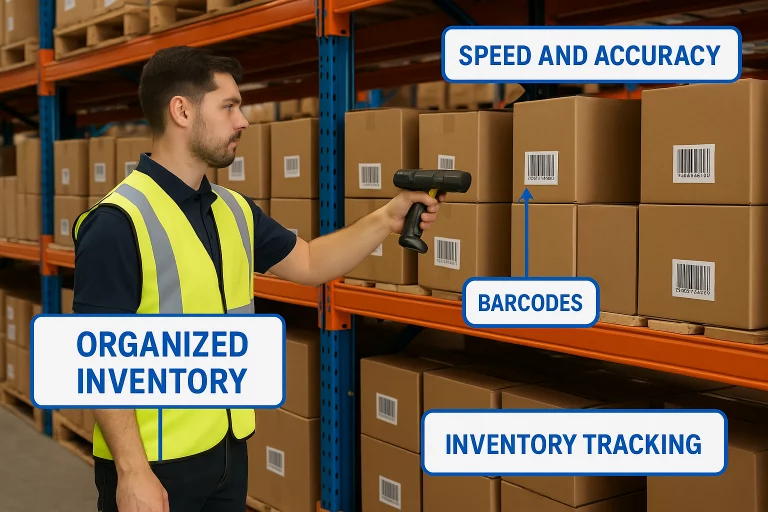
Real-Time Inventory Tracking
Real-time inventory visibility can be crucial for seizing opportunities. Barcode scanning systems update inventory records instantly, giving managers and employees immediate access to current data. This feedback enables proactive responses, such as reordering stock or reallocating products, and helps quickly identify theft or misplaced items. For multi-channel retailers, having a single, accurate source of inventory is vital. It enables dynamic allocation, timely orders, and enhanced forecasting. Continuous access to up-to-date information supports daily operations and improves strategic decision-making, optimizing inventory policies and supply chain processes.
Cost Savings and Increased Profitability
Reducing costs while driving profitability is essential for businesses. Barcode scanning effectively achieves these goals by providing labor savings, minimizing inventory errors, and optimizing stock levels. Automating workflows reduces staffing needs, lowers overtime expenses, and frees up time for revenue-generating activities. Accurate data from barcode technology helps prevent over-ordering and under-ordering, thus protecting working capital and enhancing customer satisfaction.
Better inventory control leads to fewer losses and write-offs by identifying discrepancies early. These benefits are crucial for businesses with tight margins or intense competition. Improved visibility allows decision-makers to target slow-moving items and obsolete products, enabling timely promotions or markdowns. Transitioning to automated tracking ultimately delivers measurable returns for finance, operations, and customer service, resulting in a more robust bottom line.
Improving Customer Satisfaction
Consistently meeting customer expectations is crucial for gaining repeat business and maintaining a positive brand image. Nowadays, shoppers often face challenges in accessing timely and accurate information about product availability. Employees may unintentionally sell items out of stock due to inadequate inventory controls or misstate what is available on the shelves. Implementing barcode scanning can help resolve these issues by providing immediate inventory data to staff and customers, enhancing order fulfillment accuracy.
This leads to fewer mistakes in picking and shipping, ensuring customers receive their exact orders on time, with fewer returns. The result is a smoother transaction experience, better reviews, and increased chances of repeat purchases. By improving reliability and transparency, barcode-driven inventory management becomes essential for customer loyalty and business growth.