

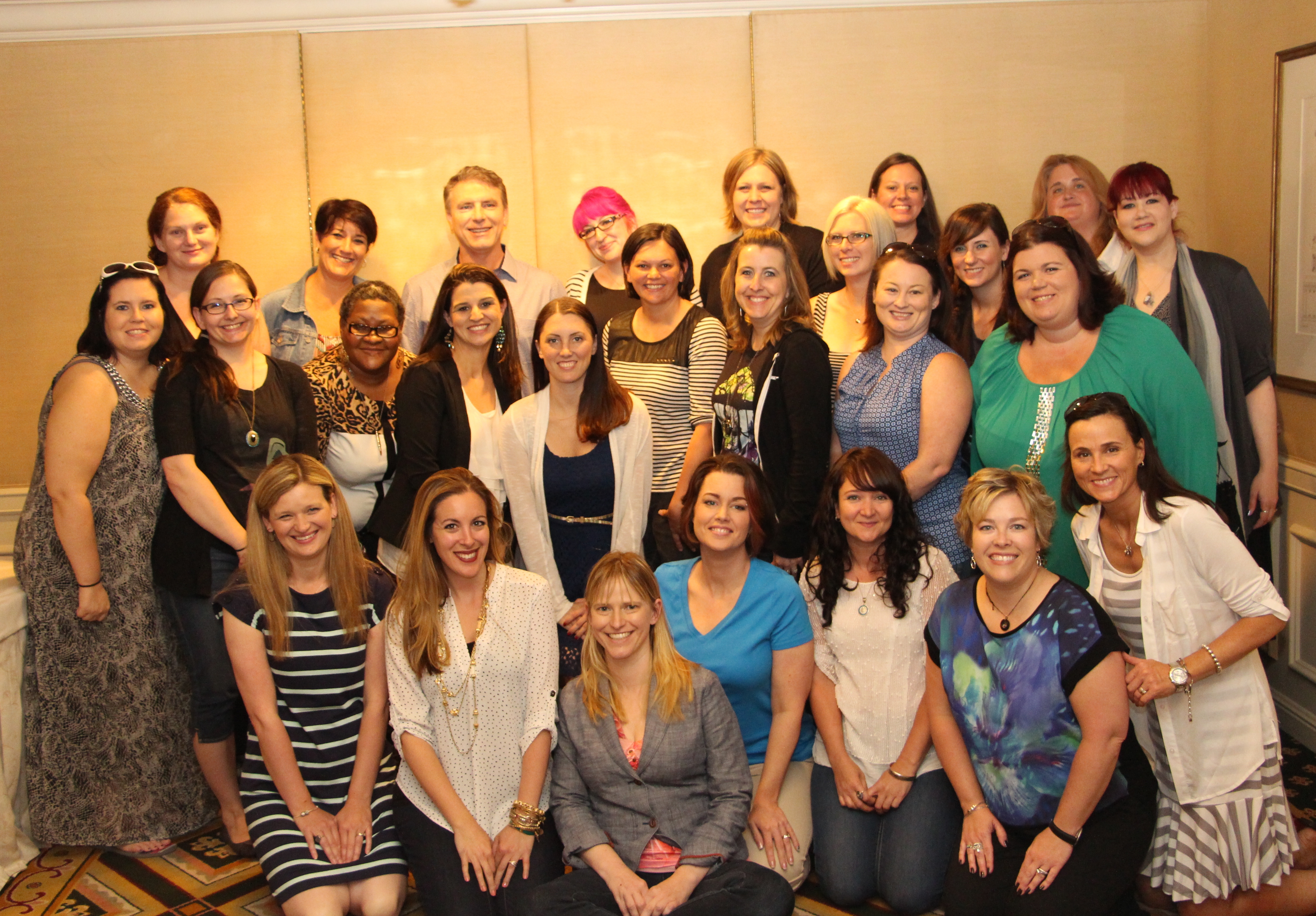
I was excited to interview Director Robert Stromberg, not only because the movie was fantastic and I wanted to know the tricks of the trade, but because he also worked on Oz The Great and Powerful so I kind of felt a weird connection since I was fortunate to be invited to the premiere last year.
I was pleasantly surprised at how direct and very open he was about directing the movie, I really got a sense that directing was in is blood and was something that he was just born to do.

* SPOILERS IN CONTENT *
Was Angelina your first choice for the role of Maleficent or did you write this with her in mind?
She was actually already attached when, when Disney hired me. They were looking for a director,but she was already engaged with the character, she had wanted to do this character for a long time. So, lucky for me she was, I didn’t have to do much digging on that part. It was sort of this perfectly made iconic combination that I was blessed to have.
Just because you have this sort of thing that looks really good in the costume, this, this iconic figure, that wasn’t it. What really surprised me, which was great, was the emotional depth and the richness of the emotional part of that character was, when you combine that with the image, is what made it powerful.
So this being your first directorial debut, what was different from being on set compared to being in the art department?

I’ve always always wanted to be a director. I used to make movies when I was a little kid and I was a huge Disney fan. I had an art teacher who was an ex-Disney artist. I used to draw like crazy, images including Maleficent when I was five, six years old. I had always wanted to tell stories and be a director. I’m glad that I did all that stuff because it prepared me not only being around these big movies but also meeting a lot of great directors. I met Peter Weir and we became close friends on a movie called Master and Commander, and he taught me a lot about how to to talk to actors and to get at an emotional level with them.
Then I spent four years with Jim Cameron and that was useful in how to be strong when you need to be. I worked with Tim Burton on how an artist can direct. So there are all these directors but they do it in different ways. I came into this with a lot of experience and not only that, you have to have to have emotion yourself. You have to have spent your life studying human behavior and really, really paying attention to why people react a certain way when they’re told something. I think if, it’s all those little bits of information plus all of the knowledge I got from just my experience with other directors. Then the confidence to be at the same level with somebody in finding the emotion of that character. That’s what made me feel comfortable in being a director.
What advice would you give to parents of children who may have an interest in going into film either directing or working in the art department, working in any capacity inthis industry?
I think, it’s obviously very competitive. It’s a competitive — but if you have to follow your passion. I’ve never done this because I wanted to be recognized. I’ve never done this because I wanted to make oodles of money. You do this because you’re passionate about it. You do this because creating is your world. And I thought that was my world until I had my own kids, and then that opened up, for me personally it opened up the reason why I’m really here on this planet. It’s not to make movies. It’s to understand the love and the true love you have as a parent.
What was your favorite scene to direct?
I think there are many, many different special moments. But I suppose the christening scene, because in the film we’re doing a retelling. So we’re not just doing a straight out of the box remake of that classic version. So it was very intentional that when you watch the movie you’ve learned a whole bunch of new material. When you get to that center point of the movie we shot that scene almost verbatim, word for word from the classic cartoon version.
And that was so that you now had all this new, fun information that you had learned and you understand why that character is doing what she’s doing. And then you get to see what happens after that. So I think, it wasn’t challenging but for me personally as a film, just standing there with several hundred extras in this huge set, and she came into the room in that costume and I was a big fan myself at that moment just in awe.
What was the creative process that you used creating the Moors and all the characters.
Over the years I probably have a file full of just sketches and strange creatures and stuff that you wanna use one day. I always approach a movie using the world itself as a psychological steering device. So, in other words, just for instance, at the beginning of this film we start off and it’s sort of happy and sunny and everything else. Then the mood of the whole world goes dark with Maleficent and then comes back up again at the end. So I think it’s really interesting, not just as a designer but to create fun things, there’s no rule book there. That’s what’s fun about it is you just do a sketch and oh, this is cool, and three months later it becomes something real.
The interesting thing I’ve learned over the projects that I’ve done is how you can steer the audience and make the audience feel something, even if they’re not aware that that’s how things are done. So that was where I started. The look of the original design was a bit too stylized for this sort of emotional, organic, grounded-in-reality story that we’re trying to tell.
So that would be distracting in this case. But it was important to me to keep the essence of what that design was that Eyvind Earle had done. So if you really look at the film you’ll see elements that you could say he would have done. Does that answer? Okay.
This is really intimidating, by the way. (Speaking in regards to all of us bloggers interviewing him) [LAUGHS]
What was the most difficult thing to bring to the big screen for this film?
Just getting through the film and still carrying a big, beating heart under your arm as you make it through this jungle is something. Someone once told me directing is like painting in a hurricane….and it’s true.
I can’t pick one thing that was challenging because just making a movie at this scale, you’re juggling, you know, just constantly juggling chainsaws and trying to draw pretty pictures at the same time. I think it is challenging to make it, to bring all these huge elements together and at the end of all that, have something with a heart and soul and emotion and something that means something.
I’m always amazed at how movies get made at all. There’s so many pieces that have to come together, it’s really a fascinating process. I’m still fascinated even though I’ve been doing this for twenty-eight years, I’m still as fascinated today as I was when I was five years old.
Were there things you felt absolutely had to be captured in this movie that was in the original movie?
Well obviously you’ve seen the film, right? So you know that we had to steer away from certain elements. But it was really important that you walk away from this film as a fan of the original film with enough that you can relate to the comparison. You could walk away saying, “You know, I learned all this new, cool stuff, but” — and yeah, it was still Sleeping Beauty.
We changed a certain amount of things, but that was another delicate path. When you’re telling or retelling a story, you ha- you have to do things that are different to make the dots and connect. Soit was really important to keep enough elements from the classic that hopefully, the fans would respect that we tried to do that and also you would walk away saying, “I just saw Sleeping Beauty but it was a whole different (story), or I saw so many different new sides of it.” That was the intent.
Had you worked with Angelina Jolie before and if not, what was it like to work with her and direct her?
I hadn’t. I went to her house the first day I met her and what was really great is we didn’t talk about the movie for the first hour, I think. I’ll never forget we just sat on some back steps in her backyard and watched her kids play out in the backyard. And we talked about life and, and being a parent and just normal stuff.
I think that’s why we connected is because we had to find out that we were both human beings first before we tacked human being problems. And that, that was a special moment for me — and I wasn’t necessarily intimidated by her, but I had never seen the human, motherly quality in there before.
You said you had to stay true to the original Sleeping Beauty but did you still have creative license in what you got to do?
Well Linda Woolverton wrote the script. I think we would deviate from that based on — a lot of times when you’re in the moment, it looks better on paper than it does when you’re actually seeing how two characters are reacting to each other, or how a scene plays out. I think part of what you learn as a director is how to adapt in a situation and understand that something is just not right and to adjust it so that it is.
I’ve always told people that whether I’m doing a painting, which is a, a composition, compositional rhythm, or music is its own rhythm, a dialog can be a rhythm too. And if it’s off, if one inflection is off slightly you have to recognize that because it makes a huge difference, difference emotionally, in how you’re supposed to feel watching it.
If you could get your hands on any other Disney classic film, what would you grab for first?
What do you guys wanna see? [We answered Snow White] I agree with you on that. As far as other projects, somebody else asked  me that, there’s a lot of great stories — I started looking at them again and I didn’t realize how much tragedy and, and just suffering there is in those, those things.
But we always just sort of remember these sweet movies. So looking at Maleficent, I think it’s more interesting as a film to show the dark and the light. If you were to look at this, you know, define, boil down this film in one sentence I would have to say it’s human beings trying to find the essence of true love and what that means and whatever that is.
Maybe it’s not the puppy love thing that you think it is. Maybe we should look to our parents and maybe there’s a deeper love that we’re not seeing. Hopefully there’s a message in this movie that it can open up some young one’s eyes to see a love in their parents that they didn’t see before. That’s kind of the message. And it’s really based on looking at my own daughter and feeling that feeling that I want, I hope that people will feel.
Are there any kind of Easter eggs for us to look for in the movie?
Good question. Besides the Eyvind Earle elements, whether it’s just designs or other stuff, I’m sure there is. I know we did some stuff because I would tell the prop people to just put a little thing here (and there).
I love that stuff. I love adding little bits, because when you catch it then it’s like, oh cool, look what they did. I did that in Oz and I did that in Alice. Like in Oz, we put like a little figure of the Tin Man in the corner and just to see if anyone would notice. Things like that.
MALEFICENT will be in theaters 5/30/14!
Follow Maleficent on Twitter
Follow Maleficent on Facebook
Follow Disney Studios on Instagram
Follow Disney Studios on Pinterest
Follow Disney on Tumblr
Check out the Maleficent YouTube Playlist
Disclosure: I was provided with an all expense paid trip by Disney. This is accordance with Federal Trade Commissions 16 CFR, Part 255 Guides Concerning the Use of. Endorsements and Testimonials in Advertising.

 Dianna Ranere