

Key Takeaways
- Understand your fundamental workplace rights.
- Learn how to document and report violations effectively.
- Recognize the importance of legal protections and resources available to you.
Table of Contents
- Understanding Your Basic Rights
- Documenting Workplace Incidents
- Reporting Violations
- Seeking Legal Assistance
- Staying Informed About Labor Laws
- Joining a Union
- Protecting Yourself from Retaliation
- Utilizing Government Resources
- Final Thoughts
Knowing your rights as an employee empowers you to shape a respectful and safe environment at your workplace. Understanding your legal protections is a crucial first step in ensuring that you and your coworkers are treated with dignity. By familiarizing yourself with workplace laws, you can identify unfair practices more quickly and handle disputes with greater confidence. When problems arise, being informed allows you to prevent mistreatment and more effectively advocate on your own behalf. Navigating complex or difficult workplace situations often means turning to established protocols, knowing when to escalate complaints, and at times, consulting a trusted employment law attorney Colorado Springs if you are in the Colorado Springs area. By making informed decisions, you protect your interests, foster a positive workplace culture, and help promote justice for all employees.
Workplaces must ensure fairness, safety, and dignity, but violations like discrimination, harassment, wage theft, or unsafe conditions can still occur, often quietly. Vigilance and continuous education are crucial for employees at all levels. Knowing your protections helps you recognize and address issues early. From your first job, understand your rights to fair pay, safe conditions, and a harassment-free environment. Keep records of problems to build a case if needed. Being proactive by monitoring and documenting experiences prevents small issues from escalating. Violations threaten your job security, finances, career, and well-being. Developing a strategy to safeguard your rights is vital in today’s diverse workforce. Resources like the EEOC offer free guidance to help employees understand and defend their workplace rights.
Understanding Your Basic Rights
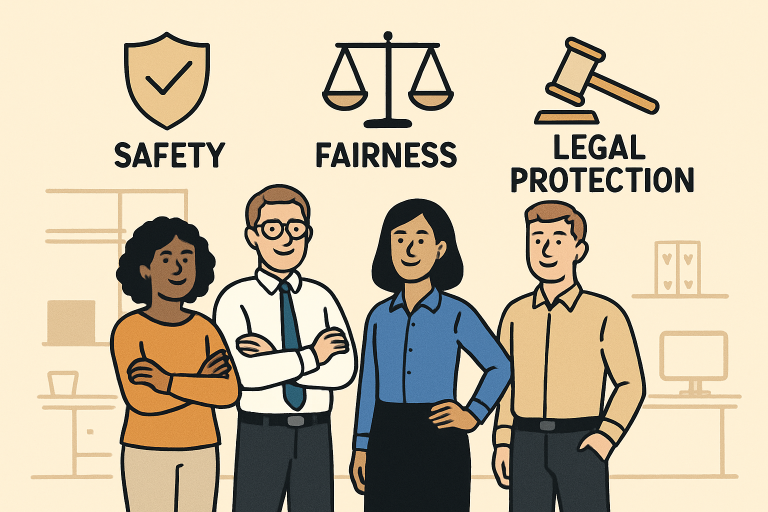
Every U.S. employee is protected by federal and state laws, ensuring fair pay, safe conditions, privacy, and anti-discrimination rights based on race, gender, religion, disability, age, or sexual orientation. Recognizing these rights helps identify violations and empowers self-advocacy. The Fair Labor Standards Act (FLSA) requires employers to pay minimum wage and overtime, varying by state, especially in high-risk sectors like service and gig work, to prevent wage theft. OSHA mandates workplaces be hazard-free, with employers identifying risks, fixing unsafe conditions, and providing safety training and equipment. Employees can raise concerns about hazards without retaliation. Anti-discrimination laws, enforced by EEOC and state agencies, protect workers throughout employment. Awareness of these rights fosters reporting and an inclusive workplace culture.
Documenting Workplace Incidents
Thorough documentation is your best defense if workplace problems arise. As soon as you suspect something is wrong, start recording the date, time, and all people involved for any event that feels troubling or suspicious. Make your notes as factual, detailed, and objective as possible, and update them while the events are still fresh in your mind. This record should include both a written account and any supporting evidence, such as digital communications, photographs, or witness statements. If you ever need to submit a complaint or pursue legal action, this paper trail is invaluable in supporting your claims.
In addition to written notes, keep copies of emails, text messages, performance reviews, and any correspondence relating to the incident. Take screenshots if necessary and store all records in a safe, personal location, not on company devices. Ask trusted colleagues who have witnessed events to write their own accounts and agree to be contacted in the future if a formal complaint is needed. Remember: well-documented events are much easier to prove than vague recollections or verbal complaints made after the fact.
Reporting Violations
If you encounter discrimination, harassment, wage theft, or unsafe working conditions, it’s critical to report the violation as soon as possible. Each employer typically has specific protocols for submitting complaints, usually involving a human resources representative or supervisor. Follow these procedures closely and maintain copies of all written reports, email submissions, and any documents you provide. Doing so provides a paper trail that proves you acted in good faith and allowed your employer to rectify the problem.
After lodging a report, keep a separate, organized file with all responses, follow-up communications, and any official company actions. Tracking these steps allows you to demonstrate your efforts to resolve issues internally—a crucial step if further legal action is required. If the problem persists or isn’t addressed to your satisfaction, escalate the issue to higher management or an outside agency for further investigation.
Seeking Legal Assistance
If your employer’s internal systems fail, if you suffer retaliation for reporting violations, or if you feel overwhelmed by complex situations, seeking outside help is a wise next step. Consult with an employment law attorney who practices in your state or region. Legal professionals can help clarify your options, formally communicate with your employer, and represent your interests if your case leads to negotiations or court. If you’re not sure where to find a reputable lawyer, your area’s bar association is a trustworthy source for referrals and initial advice.
Staying Informed About Labor Laws
Labor laws—and their interpretation—change often due to new legislation, executive orders, and court decisions. Stay informed by following workplace news, subscribing to employment law updates, and regularly checking official government sources. This knowledge enables you to protect yourself more effectively and recognize changes that may impact your workplace rights. Review trusted resources for accessible coverage of news and developments affecting American workers.
Joining a Union
Collective action can provide safety in numbers and stronger negotiating power. Joining a union specific to your field can provide you with access to experienced representatives, legal protection, enhanced wages, improved working conditions, and collective bargaining rights. Unions have experience navigating complex disputes and can offer training, support, and advocacy if you feel your rights are threatened. Being part of a union connects you with a supportive network of peers who can help you address shared concerns more effectively than acting alone.
Protecting Yourself from Retaliation
Federal law strictly prohibits employers from retaliating against employees who report workplace violations in good faith. Retaliation may take many forms, including demotion, exclusion from key projects, unjust discipline, or even termination. If you suspect retaliation, document each incident, keep all relevant correspondence, and consult an attorney or your union representative as soon as possible. Quick action can halt retaliation before it worsens and may be essential to restoring your workplace position and recovering any losses.
Utilizing Government Resources
Government agencies like the U.S. Department of Labor and EEOC offer vital resources for employees with workplace issues, investigating complaints, enforcing laws, and guiding through the complaint process at no cost. They provide educational materials to recognize and address violations. For accurate, current info or direct help, visit their websites or call their helplines—many provide free, multilingual support. Staying alert and proactive protects your well-being and promotes fairness at work. Early action, diligent records, and utilizing resources help create a safer, fairer environment. Your advocacy, however small, paves the way for a more just workplace.
Final Thoughts
Empowerment in the workplace begins with knowledge and action. Understanding your fundamental rights, documenting incidents, and knowing how to report violations are essential steps toward maintaining a fair and respectful work environment. When employees stay informed, seek support, and utilize available legal and government resources, they not only protect themselves but also contribute to a culture of accountability and equality. Every proactive step—whether it’s consulting an attorney, joining a union, or reporting misconduct—strengthens the collective voice of workers and helps ensure that workplaces remain safe, lawful, and inclusive for all.