

I am a BlogPaws Conference Sponsored Blogger on behalf of Hill’s Pet Nutrition and the BlogPaws Pet Blogger Network. I am being compensated for helping Promote Pet Prepared, Hill’s Disaster Relief, and Clear the Shelters but FSM Media only shares information we feel is relevant to our readers. Hill’s Pet Nutrition, Inc. is not responsible for the content of this article.

Are you prepared should a natural disaster strike? Better yet, if you are a pet owner, are you prepared as far as your pets are concerned? Just last month we were in a situation where we lost power for 3 days, luckily we had prepared for the storm and made it through, and so did all of our 5 pets. But it does take some planning ahead.
In honor of National Animal Disaster Preparedness Day (NADPD)Saturday, May 12, 2018, Hill’s Pet Nutrition is joining its nation-wide network of animal shelter partners in a campaign to educate pet families on the ways they can stay safe and be better prepared to survive a disaster. Through its Disaster Relief Network, Hill’s is able to respond as soon as possible to supply free pet food to families in need.
Hill’s Disaster Relief Network, the first of its kind, was established in 2013 and has helped pets in need by delivering over 280,000 pounds of free food to nearly 300 organizations across the country.
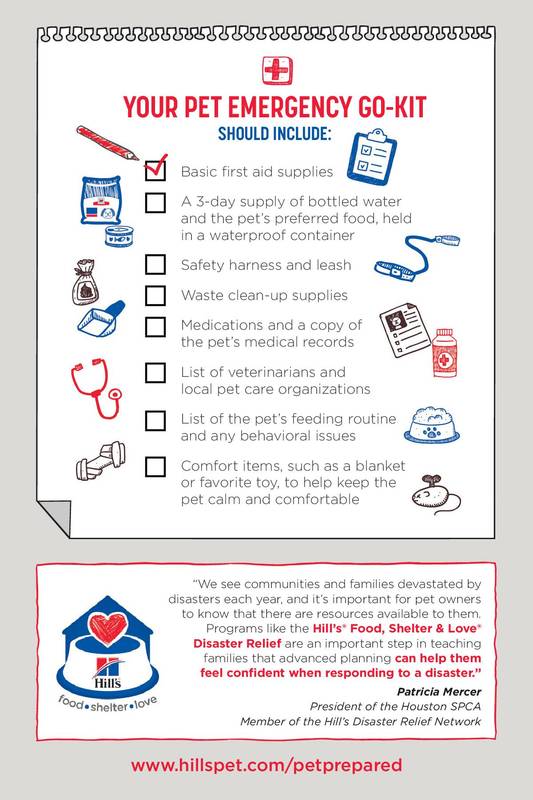
First, Hill’s and local shelter urge families with pets to create a Pet Emergency Go-Kit. Keep this kit with your family emergency kit and supplies so it is easily accessible. They suggest the following:
- Basic first aid supplies
- 3-day supply of bottled water and the pet’s preferred food, held in a waterproof container
- Safety harness and leash
- Waste clean-up supplies
- Medications and a copy of the pet’s medical records
- List of veterinarians and local pet care organizations
- List of the pet’s feeding routine and any behavioral issues
- Comfort items, such as a blanket or favorite toy, to help keep the pet calm and comfortable
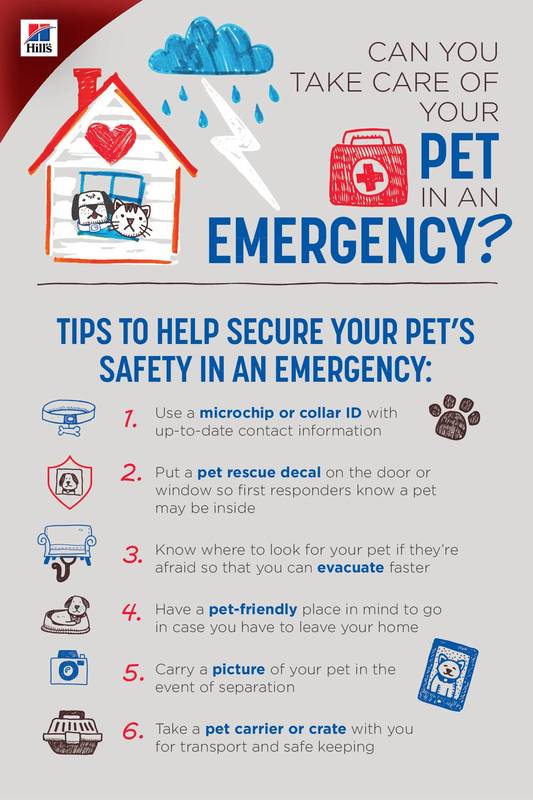
Hill’s also recommends the following Tips to Help Ensure Your Pet’s Safety in an Emergency:
- Ensure your pet’s identification by using a microchip or collar ID tag, and make sure that all contact information is up-to-date. You can update the microchip’s contact information at the manufacturer’s website by locating the code from the barcode sticker or the confirmation form provided by your veterinarian or animal shelter.
- Display a pet rescue decal on the front door or window to let first responders know there is a pet in the house. Include the local veterinarian’s contact information.
- Learn where your pets like to hide in the house when frightened. Finding a pet quickly will help to evacuate faster.
- Identify a location to take a pet in case of evacuation. Keep in mind that disaster shelters for people may not be open to pets. Scout hotels and motels with pet-friendly policies and ask relatives or friends if they could house you and your pet.
- Carry a picture of the pet in the event of separation.
- In case of evacuation, consider taking a pet carrier or crate for transport and safe-keeping.
Are your pets part of your emergency plan? Comment below and tell me how you prepare.
STAY SOCIAL WITH HILL’S PET

Website | Hill’s Food Shelter Love | Twitter | Facebook | Instagram

I will be attending the 10th annual BlogPaws Conference April 18th – 20th as a Hill’s Pet Sponsored blogger and I look forward to learning more about the Hill’s Disaster Relief Network and even more ways to prepare for disaster. Follow me on social media during the conference:
FSM Media on Twitter – FSM Media on Instagram – FSM Media on Facebook
Follow the hashtags: #BlogPaws #PetPrepared #ad
This is a sponsored conversation written by me on behalf of Hill’s Pet Nutrition. The opinions and text are all mine.
 Dianna Ranere