

Table of Contents
- Environmental Impact of Traditional Flooring
- Benefits of Sustainable Flooring
- Popular Sustainable Flooring Options
- Certifications and Standards
- Making the Switch to Sustainable Flooring
As sustainability becomes a greater priority for homeowners and designers alike, the impact of everyday choices—especially those related to home renovations and remodels—cannot be overstated. Flooring plays a significant role in defining not just the aesthetic value of spaces, but also their ecological footprint. Making a conscious selection of sustainable flooring options is one significant way individuals can contribute positively to environmental conservation, improve indoor air quality, and even boost their property’s long-term value. With a range of new and innovative materials available, the opportunity to create a greener, healthier living space has never been more accessible. For expert guidance and a broad selection of sustainable choices, consider resources like SOEN as you explore your flooring options.
Unlike traditional flooring, which often relies on resource-intensive or chemically laden materials, sustainable options are designed to preserve natural resources and minimize environmental harm. This not only protects the planet but also supports healthier living environments for families. Let’s explore why switching to eco-conscious flooring is a crucial decision for your home’s present and future.
Environmental Impact of Traditional Flooring
Traditional flooring solutions, such as solid hardwood, carpets, and vinyl, are widespread, but they often come with substantial environmental drawbacks. The production and sourcing of these materials typically demand the felling of mature forests, excessive energy consumption, and, in many cases, the release of harmful chemicals into the environment. For example, non-certified hardwood harvesting can contribute to rampant deforestation—directly endangering ecosystems and wildlife. Meanwhile, synthetic carpets and vinyl frequently emit volatile organic compounds (VOCs), which can result in diminished indoor air quality and potential health risks for residents. According to the U.S. Environmental Protection Agency, concerns about chemical emissions from traditional flooring products have grown as research links certain materials to indoor air pollution and environmental harm.
Benefits of Sustainable Flooring
Switching to sustainable flooring provides a host of tangible benefits for both the planet and homeowners:
- Environmental Protection: Sustainable flooring reduces the need for resource exploitation by using rapidly renewable materials or recycled content. This lessens carbon emissions associated with extensive harvesting, manufacturing, and long-distance transportation. According to Forbes, eco-friendly flooring options like bamboo, cork, and reclaimed wood are leading the way in creating greener, more responsible home environments.
- Healthier Homes: Green flooring materials typically emit little or no VOCs, resulting in cleaner indoor air and a substantially lower risk of respiratory problems and allergic reactions.
- Economic Value: Eco-friendly flooring isn’t just good for the planet—it’s typically long-lasting, durable, and requires less maintenance. This helps homeowners save money over time due to fewer replacements and lower repair costs. Additionally, selecting sustainable products can enhance home resale value in an increasingly eco-conscious market.
Popular Sustainable Flooring Options
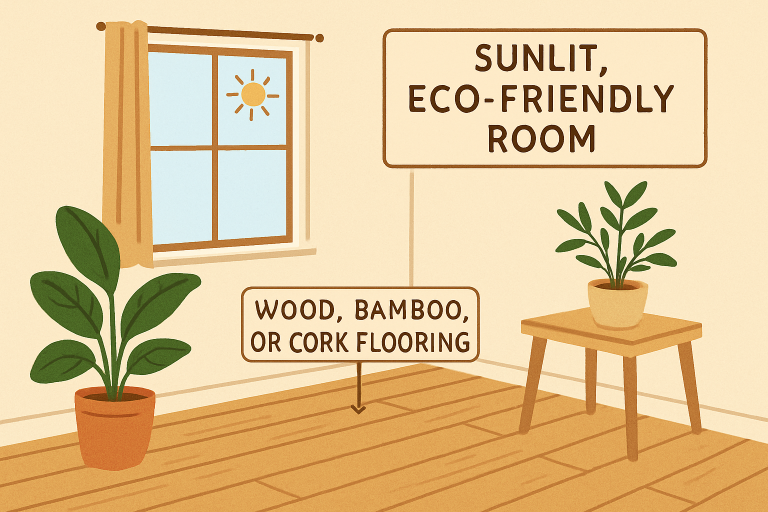
Today’s market offers a wide variety of sustainable flooring materials suited to different needs and styles:
- Bamboo: Highly renewable and fast-growing, bamboo serves as an excellent alternative to traditional hardwood. It offers durability and style while minimizing the impact on deforestation.
- Cork: Harvested from the bark of the cork oak tree without cutting down the tree, cork regenerates naturally, making it an appealing ecological and aesthetic solution. Cork also provides sound absorption and natural thermal insulation.
- Linoleum: Made from natural ingredients like linseed oil, wood flour, and jute, linoleum is free from petrochemicals, highly durable, and biodegradable at the end of its lifecycle.
Certifications and Standards
Eco-conscious consumers should look for labels and certifications when selecting flooring, as these can verify a product’s sustainability:
- Forest Stewardship Council (FSC): This ensures that wood and bamboo products come from responsibly managed forests that provide environmental, social, and economic benefits.
- GreenGuard Certification: This certification ensures that products contribute to maintaining healthier indoor air by emitting low levels of volatile organic compounds (VOCs).
- LEED (Leadership in Energy and Environmental Design): Recognizes the use of green materials and practices in the construction and design of homes and other buildings, offering points for sustainable flooring choices.
Making the Switch to Sustainable Flooring
Transitioning to eco-friendly flooring is straightforward with the right approach:
- Assess Your Space: Consider needs for moisture resistance (especially in kitchens and bathrooms), durability, and the desired appearance for each room in your home.
- Research and Compare: Evaluate the advantages of different sustainable materials, considering their maintenance, lifespan, and cost, to determine which one aligns best with your lifestyle.
- Consult Professionals: Seek expert advice to ensure you choose the most appropriate product and receive proper installation for longevity.
- Budget Wisely: While eco-friendly options may have higher upfront costs, their durability and potential for energy-saving insulation often result in significant savings over time.
Opting for sustainable flooring is more than just an aesthetic or economic decision; it’s a commitment to healthier indoor environments and a more resilient planet. Your home can become part of the solution to environmental challenges, setting an example for friends and neighbors alike.